
Inverters
An inverter turns 12V or 24V DC from a battery or DC power supply into 230V mains output, for camping, commercial vans and lorries, or back-up power in a blackout. Mercury soft start inverters come in modified sine wave models from 150W to 2500W and pure sine wave models from 300W to 1000W, with 12V and 24V input versions.
 Save £6.98
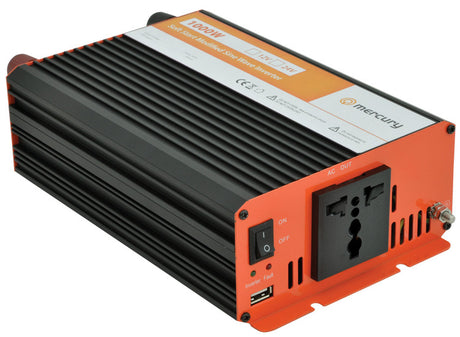
Mercury: 652.006UK, Soft Start Modified Sine Wave Inverter, 1000W, 12V DC, USB Socket
High Efficiency£ 93 80RRP: £100.78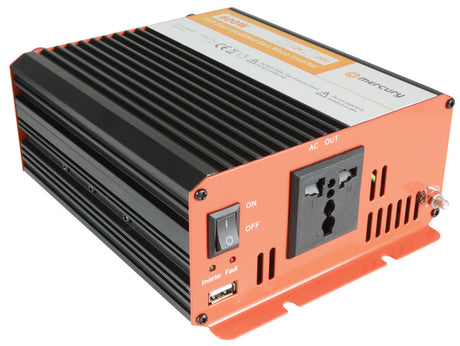 Save £3.79
Mercury: 652.004UK, Soft Start Modified Sine Wave Inverter, 12V, 600W, 2.1A USB, 230 Vac Output
600W Power£ 51 04RRP: £54.83Fast delivery Tomorrow, 11 Nov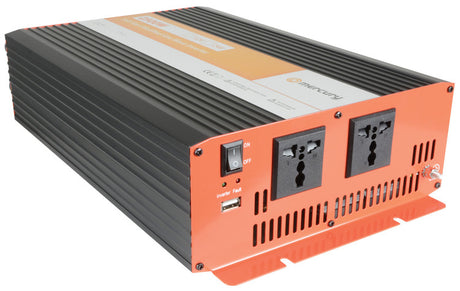 Save £14.67
High Efficiency£ 197 28RRP: £211.95Fast delivery Tomorrow, 11 Nov
 Save £2.05
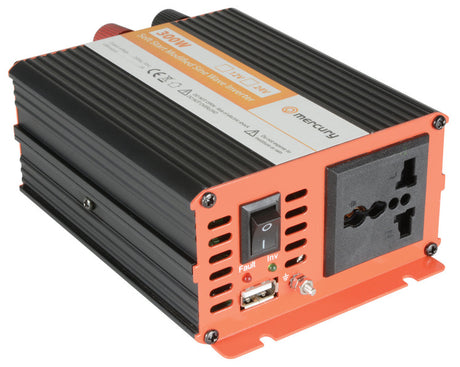
High Efficiency£ 27 60RRP: £29.65
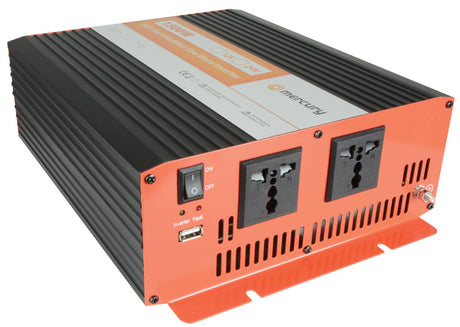 Save £9.16
High Efficiency£ 123 14RRP: £132.30Fast delivery Tomorrow, 11 Nov
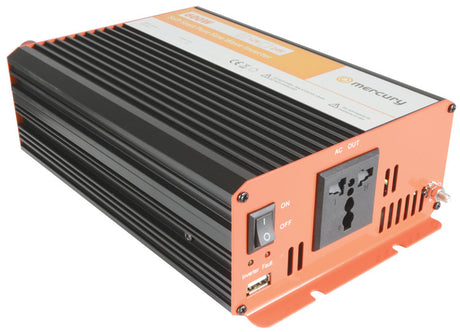 Save £6.70
Mercury: 652.102UK, Soft Start Pure Sine Wave Inverter, 12V, 600W, 230Vac Output
High Efficiency£ 90 02RRP: £96.72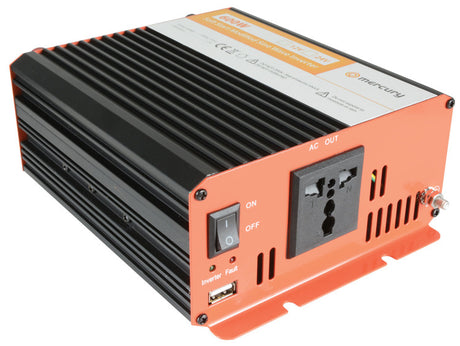 Save £4.10
Mercury: 652.005UK, Soft Start Modified Sine Wave Inverter, 600W, 24Vdc, USB Output
Efficient£ 55 18RRP: £59.28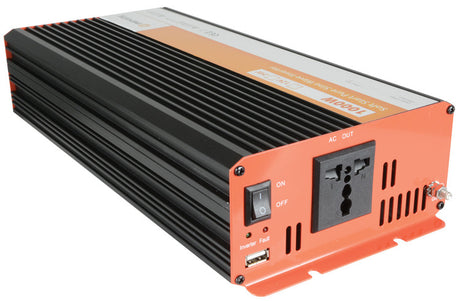 Save £12.82
High Efficiency£ 172 43RRP: £185.25
 Save £9.75
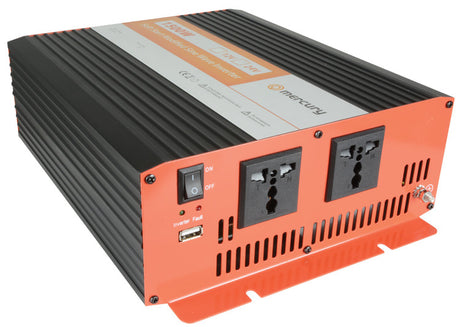
Mercury: 652.009UK, Soft Start Modified Sine Wave Inverter, 1500W, 24Vdc, 230V AC Output
Soft Start£ 131 04RRP: £140.79Fast delivery Tomorrow, 11 Nov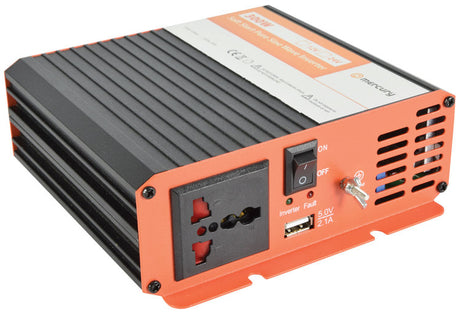 Save £4.17
Mercury: 652.100UK, Soft Start Pure Sine Wave Inverter, 300W, 12Vdc, 230V Mains Output
Pure Sine Wave£ 56 02RRP: £60.19Fast delivery Tomorrow, 11 Nov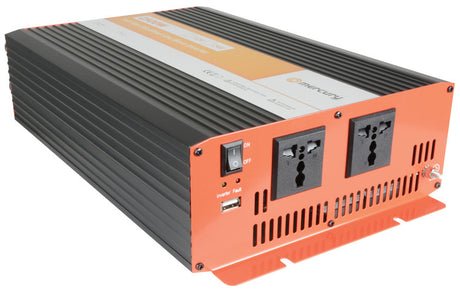 Save £14.41
High Efficiency£ 193 77RRP: £208.18
 Save £4.34
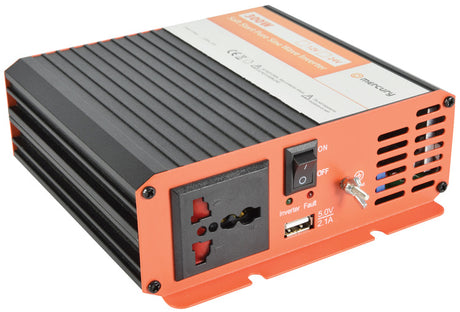
Mercury: 652.101UK, 24V 300W Soft Start Pure Sine Wave Inverter, 230V Output, 90% Efficiency
High Efficiency£ 58 42RRP: £62.76Fast delivery Tomorrow, 11 Nov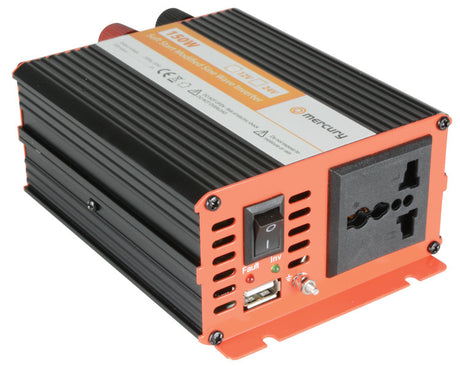 Save £1.57
Over 85% Efficiency£ 21 18RRP: £22.75Fast delivery Tomorrow, 11 Nov
Choosing Inverters
Pick the waveform first, then the input voltage, then a power rating with room for start-up surges.
Modified or pure sine wave
The 652.004UK modified sine wave inverter is made for TVs, lighting, fans, kettles and many other everyday appliances, and the modified sine wave models are rated at over 85% efficiency. For equipment with inductive loads, voltage sensitive devices or audio equipment, a pure sine wave inverter is the recommended choice. The pure sine wave models, such as the 652.102UK, give a high accuracy output wave form with less than 4% THD and add reverse polarity protection.
Input voltage
Match the input to the battery or DC supply, and make sure the correct version is selected for the input power you will use. Several ratings come as a pair: the 600W 652.004UK runs from 12V and the 652.005UK from 24V, and at 2500W the 652.010UK is the 12V version and the 652.011UK the 24V one. In pure sine wave, the 300W 652.101UK takes a 24V input.
Sizing for surges
The power rating should sit well above the load: at least 3 times the device's rated power for models such as the 652.002UK and 652.101UK, to avoid damage to the inverter from a current surge. On the pure sine wave models, allow for fridges and freezers, which can surge up to 7 times their rated power. On the 652.009UK, soft start minimises inverter shutdown when large inductive loads are connected.
Protection and extras
Every model has low and over voltage input protection plus short circuit, overload and overheat protection. The 652.005UK has a built-in 2.1A USB socket, and the pure sine wave 652.102UK and 652.104UK have a built-in 1000mA USB socket. The 652.006UK comes with a pair of 800mm DC power cables and a spare blade fuse.
| Model | Waveform | Input | Output |
|---|---|---|---|
| 652.000UK | Modified sine | 12V | 150W |
| 652.004UK | Modified sine | 12V | 600W |
| 652.011UK | Modified sine | 24V | 2500W |
| 652.101UK | Pure sine | 24V | 300W |
| 652.102UK | Pure sine | 12V | 600W |
| 652.104UK | Pure sine | 12V | 1000W |
Related categories
Find a battery or supply to run an inverter in batteries and power supplies, step voltage down with transformers and voltage regulation, compare uninterruptible power supplies, or browse the wider Mercury range.
Brands we stock in Inverters
Frequently asked questions
Can I use a power inverter in a van?
Yes, a power inverter can run mains appliances in a van using power stored in the vehicle's battery. Match the inverter's input voltage to the battery, which is usually 12V in vans and often 24V in lorries. Heavier loads usually need the engine running or a separate leisure battery to avoid flattening the starter battery. The range here includes soft start inverters for low-voltage battery inputs.
What is a power inverter?
A power inverter converts DC power stored in a battery into AC mains-style power, so ordinary mains appliances can run where there is no socket. Inverters are often used in vans, on camping trips and for back-up power in a power cut. Sensitive electronics and audio equipment usually need a cleaner output waveform than simple appliances such as lamps.
What size power inverter do I need?
Choose a power inverter with a continuous rating comfortably above the combined wattage of the appliances you plan to run together. Motors, pumps, fridges and other inductive loads can draw several times their rated power at start-up, so they need extra headroom. Check the appliance's rating plate and allow for that surge before picking a size.
Why buy from West Midlands Electrics
- Established 1975
- Birmingham trade counter
- UK-only supply
Updated
You may also like
-
Save £6.98
Mercury: 652.006UK, Soft Start Modified Sine Wave Inverter, 1000W, 12V DC, USB Socket
High Efficiency£ 93 80RRP: £100.78 -
Save £3.79
Mercury: 652.004UK, Soft Start Modified Sine Wave Inverter, 12V, 600W, 2.1A USB, 230 Vac Output
600W Power£ 51 04RRP: £54.83Fast delivery Tomorrow, 11 Nov -
Save £14.67
High Efficiency£ 197 28RRP: £211.95Fast delivery Tomorrow, 11 Nov
-
Save £2.05
High Efficiency£ 27 60RRP: £29.65
-
Save £9.16
High Efficiency£ 123 14RRP: £132.30Fast delivery Tomorrow, 11 Nov
-
Save £6.70
Mercury: 652.102UK, Soft Start Pure Sine Wave Inverter, 12V, 600W, 230Vac Output
High Efficiency£ 90 02RRP: £96.72 -
Save £4.10
Mercury: 652.005UK, Soft Start Modified Sine Wave Inverter, 600W, 24Vdc, USB Output
Efficient£ 55 18RRP: £59.28 -
Save £12.82
High Efficiency£ 172 43RRP: £185.25
-
Save £9.75
Mercury: 652.009UK, Soft Start Modified Sine Wave Inverter, 1500W, 24Vdc, 230V AC Output
Soft Start£ 131 04RRP: £140.79Fast delivery Tomorrow, 11 Nov -
Save £4.17
Mercury: 652.100UK, Soft Start Pure Sine Wave Inverter, 300W, 12Vdc, 230V Mains Output
Pure Sine Wave£ 56 02RRP: £60.19Fast delivery Tomorrow, 11 Nov -
Save £14.41
High Efficiency£ 193 77RRP: £208.18
-
Save £4.34
Mercury: 652.101UK, 24V 300W Soft Start Pure Sine Wave Inverter, 230V Output, 90% Efficiency
High Efficiency£ 58 42RRP: £62.76Fast delivery Tomorrow, 11 Nov -
Save £1.57
Over 85% Efficiency£ 21 18RRP: £22.75Fast delivery Tomorrow, 11 Nov